
Ceramic Coating vs PPF San Diego | What's the Difference?
Enhanced Automotive San Diego Installs Both — Here’s How to Think About Them
The ceramic coating vs PPF San Diego question comes up constantly at Enhanced Automotive’s Kearny Mesa shop. Owners researching paint protection see both options recommended, at different price points, with partially overlapping marketing language — and it’s genuinely confusing without a clear breakdown of what each technology actually does. Here is a direct explanation based on 18 years of installing both services on San Diego vehicles. These two products do not compete. They solve different problems, and understanding which problem you’re facing is the right starting point.
What Ceramic Coating Does
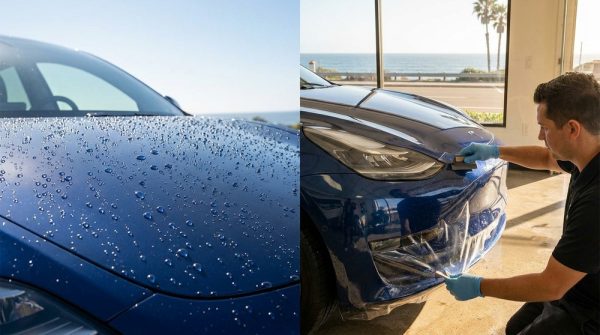
Ceramic coating is a liquid polymer applied to exterior paint that bonds chemically to the clear coat and cures into a hard, hydrophobic layer. It is a chemical barrier, not a physical one. What it does well: repels water and contaminants, makes the surface dramatically easier to wash, adds UV resistance that slows paint fading, and intensifies gloss. A well-applied ceramic coating on San Diego paint can last three to five years before requiring reapplication.
What ceramic coating does not do: it does not stop rock chips. A stone traveling at 70 mph hits the hood, and a ceramic coat provides no meaningful impact resistance. The chemistry is not designed to absorb kinetic energy — it’s designed to repel water molecules and make cleaning easier. This is the critical distinction in the paint protection film vs ceramic coating San Diego conversation that most marketing copy glosses over.
What PPF Does
Paint protection film is a physical barrier — a thermoplastic polyurethane (TPU) layer, typically 6–8 mil thick, that bonds to the paint and absorbs impacts. When a rock hits a PPF’d hood, the film takes the damage. The paint underneath remains intact. High-quality PPF is also self-healing: minor surface scratches disappear with heat from the sun or a heat gun, and the film regenerates its surface structure. PPF also contains UV inhibitors in the topcoat, which provide meaningful sun protection alongside the physical barrier function.
Where Each One Falls Short
Ceramic coating fails at stopping physical impact damage. No matter how thick the layer, it cannot prevent rock chips, deep scratches, or road debris marks. Owners who install ceramic coating hoping for chip protection will be disappointed the first time a pebble hits their hood at freeway speed. PPF, by itself, is less hydrophobic than a dedicated ceramic coat. Water does not bead and sheet as aggressively on bare TPU film as it does on a quality ceramic surface. Each product has a real limitation — and understanding those limits is the practical starting point for deciding which to install.
Not Sure Which Service Is Right for Your Vehicle?
Enhanced Automotive San Diego will give you a straight answer based on how you drive, where you park, and what your vehicle is worth.
Get a Free Quote or call us at (619) 213-9896.
When to Choose PPF Over Ceramic
Choose paint protection film San Diego as the priority when your vehicle is new or has pristine paint you want to preserve; you drive on San Diego freeways daily and face consistent rock chip exposure; your vehicle has a high market value and chip damage represents a meaningful repair cost; or you own a Tesla, BMW, or Porsche where paint softness or thin factory clear coat makes the vehicle particularly chip-vulnerable. The physical protection PPF provides is irreplaceable in those situations. See the paint protection services at Enhanced Automotive for available film options with 10-year manufacturer warranties.
When to Choose Ceramic Over PPF
Choose ceramic coating San Diego as the priority when budget constraints make full PPF impractical; the vehicle is older or already has minor paint imperfections; your primary concern is paint hydrophobics and appearance maintenance rather than impact protection; or you want to protect a vinyl-wrapped vehicle — ceramic coating over wrap significantly improves water behavior and longevity of the wrap surface. Ceramic is also the right standalone choice on vehicles parked primarily in garages where chip exposure is low but UV and contaminant buildup are the practical daily concerns.
The Case for Using Both: PPF First, Then Ceramic
Many San Diego vehicle owners choose both services — and when they do, order matters. PPF goes on first, applied to high-impact zones or the full vehicle. Once the film has fully cured (typically 30 days), a ceramic coating is applied over the PPF and across the remaining painted surfaces. The ceramic adds hydrophobic properties to the film surface and provides the wet-gloss depth that bare TPU film doesn’t achieve on its own. This combined approach is what many luxury and exotic car owners in San Diego choose for new vehicles. The gallery at Enhanced Automotive includes vehicles treated with both services.
Frequently Asked Questions
Does ceramic coating need to be applied before or after PPF?
After. PPF is installed on the paint first and must cure for approximately 30 days before ceramic coating is applied on top of it. Applying ceramic before PPF would seal in surface contaminants that compromise film adhesion and introduce an additional layer between the TPU and the paint where the bond needs to be clean.
Can I apply ceramic coating to just the PPF’d panels?
Yes, and many owners choose this approach — ceramic over PPF on the front-end package, and ceramic on the remaining unprotected panels. It creates a uniform hydrophobic finish across the entire vehicle regardless of which panels have film underneath, and produces consistent water behavior front to rear.
How much does ceramic coating cost compared to PPF in San Diego?
Ceramic coating ranges from $700–$2,500 depending on number of layers, vehicle size, and paint correction required beforehand. PPF ranges from $1,800–$8,000+ depending on coverage level and film brand. These are complementary services at different price points — not alternatives on the same budget line. The full-protection approach combines both.
Does PPF replace the need for regular washing and maintenance?
PPF reduces maintenance burden, but the film still benefits from regular washing and periodic application of a PPF-compatible spray detailer. Ceramic over PPF further reduces that burden. Neither eliminates washing — contamination bonds to any surface over time. The difference is how much effort removal requires and how long the surface stays clean between washes.
Ready to Get Started?
Whether you need PPF, ceramic coating, or both, Enhanced Automotive San Diego has been protecting vehicles in this market for 18 years and will give you a straight recommendation for your specific vehicle and budget.
Get a Free Quote or call us at (619) 213-9896.