
Is PPF Worth It? Honest Answer for San Diego Car Owners
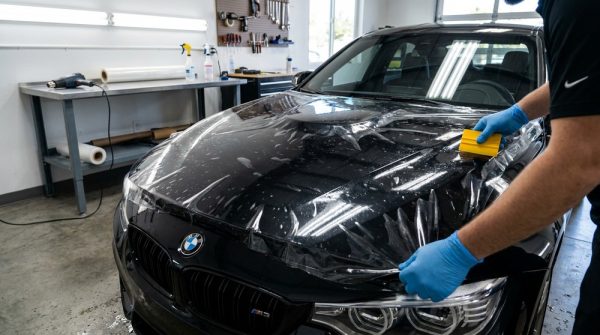
Enhanced Automotive San Diego Gets This Question Every Week
Enhanced Automotive San Diego has installed paint protection film since 2008, and “is PPF worth it?” is the question new clients ask most consistently. It’s a fair question. The upfront cost is real, and the benefit is invisible by design — a good PPF install looks like nothing at all. Here is a direct answer based on 18 years of watching what happens to protected and unprotected vehicles in San Diego’s specific environment: for most vehicles driven in this region, yes, PPF is worth it. Here’s why.
What PPF Actually Costs in San Diego
Paint protection film worth it San Diego conversations always start with cost. A front-end package — hood, front bumper, fenders, mirrors — runs $1,800–$3,500 at a quality installer. Full vehicle coverage ranges from $4,500–$8,000 depending on vehicle size and film brand. These numbers assume premium TPU film with a proper warranty, full panel disassembly, and no shortcuts on edge wrapping. Budget installs at $800–$1,200 exist, but they use thinner film, skip disassembly, and typically show edge lifting within 12–18 months.
The honest framing: PPF is not cheap, and whether it’s worth the cost depends entirely on what the alternative actually costs you over time.
The Real Cost of Not Having PPF in San Diego
San Diego’s freeway system generates consistent rock chip damage. The I-5, I-8, I-805, and I-15 corridors carry heavy commercial truck traffic, and road debris at 65–70 mph leaves marks that standard clear coat cannot resist. A single professional chip repair runs $150–$400. A hood with moderate chip damage — realistic after three to five years of San Diego freeway commuting — requires a full panel respray. A quality hood and bumper respray from a reputable body shop in San Diego costs $2,500–$5,000. On luxury vehicles with factory pearl or tri-coat finishes, matching paint and blending panels adds to that cost.
Does PPF protect paint? Yes — against exactly that scenario. A PPF’d hood absorbs rock impacts without transmitting damage to the paint. The film takes the mark; the paint underneath stays clean. That is the physical reality of how TPU film works.
The Resale Value Argument
Paint condition is one of the top three factors that determine a vehicle’s private-sale and trade-in value, alongside mileage and mechanical condition. A 2021 iSeeCars analysis found that vehicles with well-maintained exterior condition sold for 10–15% more at private sale than comparable vehicles with paint damage. For a $50,000 vehicle, that’s a $5,000–$7,500 difference in realized value at trade-in. A full PPF install that cost $5,500 and preserved the paint over five years of ownership is not an expense — it’s a recoverable investment in the vehicle’s asset value.
Get an Honest Quote for Your Vehicle
Enhanced Automotive San Diego will tell you exactly what coverage makes sense for how you drive — no upselling, no pressure.
Get a Free Quote or call us at (619) 213-9896.
What Coastal San Diego UV Does Over Time
San Diego has one of the highest UV indices in the continental United States. Unprotected clear coat begins to show visible fading and oxidation between three and six years of regular outdoor parking in direct San Diego sun. Once oxidation begins, correction requires machine polishing — and repeated polishing thins the clear coat until respray becomes the only option. Premium PPF contains UV inhibitors in the topcoat layer that block radiation before it reaches the paint. The film ages; the paint underneath does not. See the paint protection services at Enhanced Automotive for film options with UV inhibitor ratings.
When PPF Is Clearly Worth It
The case for PPF is strongest in three situations. First, new vehicles: applying film at delivery or within 90 days preserves factory paint in flawless condition — no chips, no oxidation, no wash marks locked under the film. Second, high-value vehicles: anything above $40,000 where paint damage represents a meaningful percentage of vehicle value. Third, daily drivers on San Diego freeways: if the car is on the I-5 or I-8 regularly, chip accumulation is a matter of when, not if.
The cost-benefit calculation is less clear for older vehicles with existing paint imperfections, or for budget vehicles where the PPF install cost is disproportionate to the vehicle’s total value. In those cases, a front-end partial package is often the better fit than full vehicle coverage.
PPF vs. Ceramic Coating: Not the Same Decision
A common misunderstanding in the paint protection film vs ceramic coating San Diego conversation is treating them as alternatives. They solve different problems. Ceramic coating is a chemical barrier — excellent for UV protection, hydrophobics, and gloss. It does not stop rock chips. PPF is a physical barrier — it stops chips and self-heals surface scratches. For maximum protection, many San Diego owners do both: PPF on high-impact zones, ceramic on top for sustained gloss and water behavior. The gallery at Enhanced Automotive includes examples of both combined approaches on real vehicles.
Frequently Asked Questions
Does PPF protect against scratches from keys or shopping carts?
Self-healing PPF films recover from light surface scratches — the kind left by fingernails, fine grit, or brushing contact. Deep gouges driven with force go through the film and into the paint. The film reduces the severity of casual scratch events significantly but is not a guarantee against deliberate or heavy-force impacts.
How do I know if the PPF install quality is good?
Look for tight edges with no lifting at trim lines, uniform clarity with no yellowing, and full panel wraps rather than film cut short at panel gaps. Ask the installer which film brand they use and request the manufacturer warranty documentation. An installer who cannot answer those questions clearly is not the right choice.
Is paint protection film worth it on a leased vehicle?
Potentially, yes. Lease returns are inspected for paint damage, and excessive chips or scratches result in end-of-lease charges. PPF on the front-end of a leased vehicle can prevent those charges — which often exceed the cost of the install itself — and the film removes cleanly at lease return with no damage to the factory paint.
How long does PPF last in San Diego?
Premium TPU films last 8–12 years with proper care. San Diego’s UV environment pushes lower-quality films faster, which is why film brand selection matters specifically in this market. Films with strong UV inhibitors and manufacturer warranties outperform budget alternatives significantly over a multi-year ownership period.
Ready to Get Started?
If you’re weighing whether paint protection film is the right call for your vehicle, the team at Enhanced Automotive will give you a straight answer — not a sales pitch.
Get a Free Quote or call us at (619) 213-9896.